Raja Ampat · Where to stay
Most weeks the same message arrives, usually late at night: where do I stay in Raja Ampat? I answered it one DM at a time for a year, and the honest answer starts one step earlier than people expect. Before the house, there is the kind of place you want to wake up in.
My own planning started badly. Twenty tabs of listings, sorted by how good the photos looked. Turquoise water looks the same on every phone screen, and I learned on the spot that the pictures were not the question.
The people who leave Raja Ampat disappointed rarely chose a bad house. They came expecting a budget hotel by the sea, and found a wooden bungalow run by a family, with rainwater for washing and dinner at the shared table. Stay Raja Ampat, the platform most homestays list on, says the same thing: the guests who come for a Papuan hut over the lagoon love it, the ones hoping for a low-cost resort are often let down.
So the first decision is not which house. It is which of the three ways of sleeping here actually matches your trip.
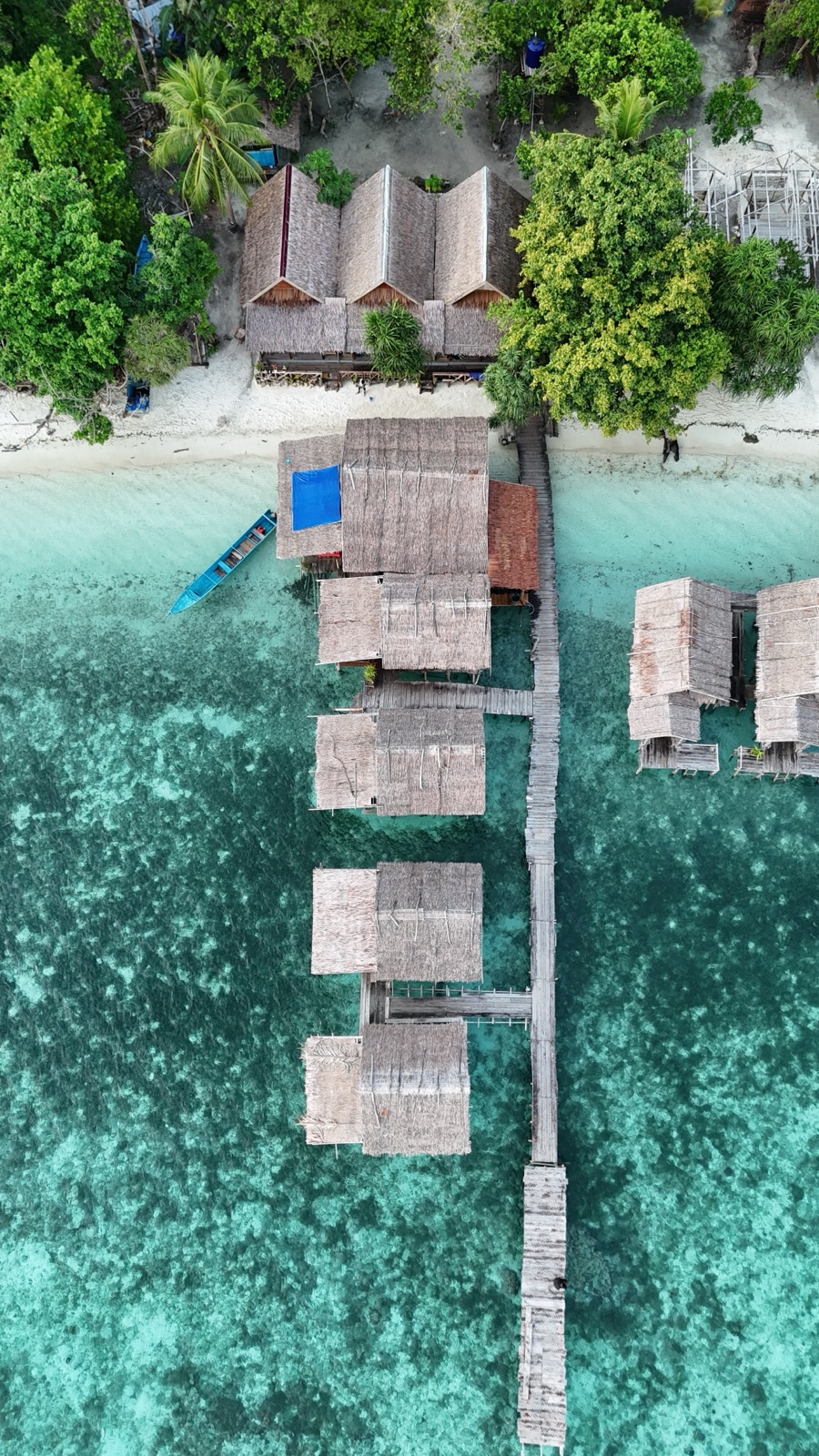
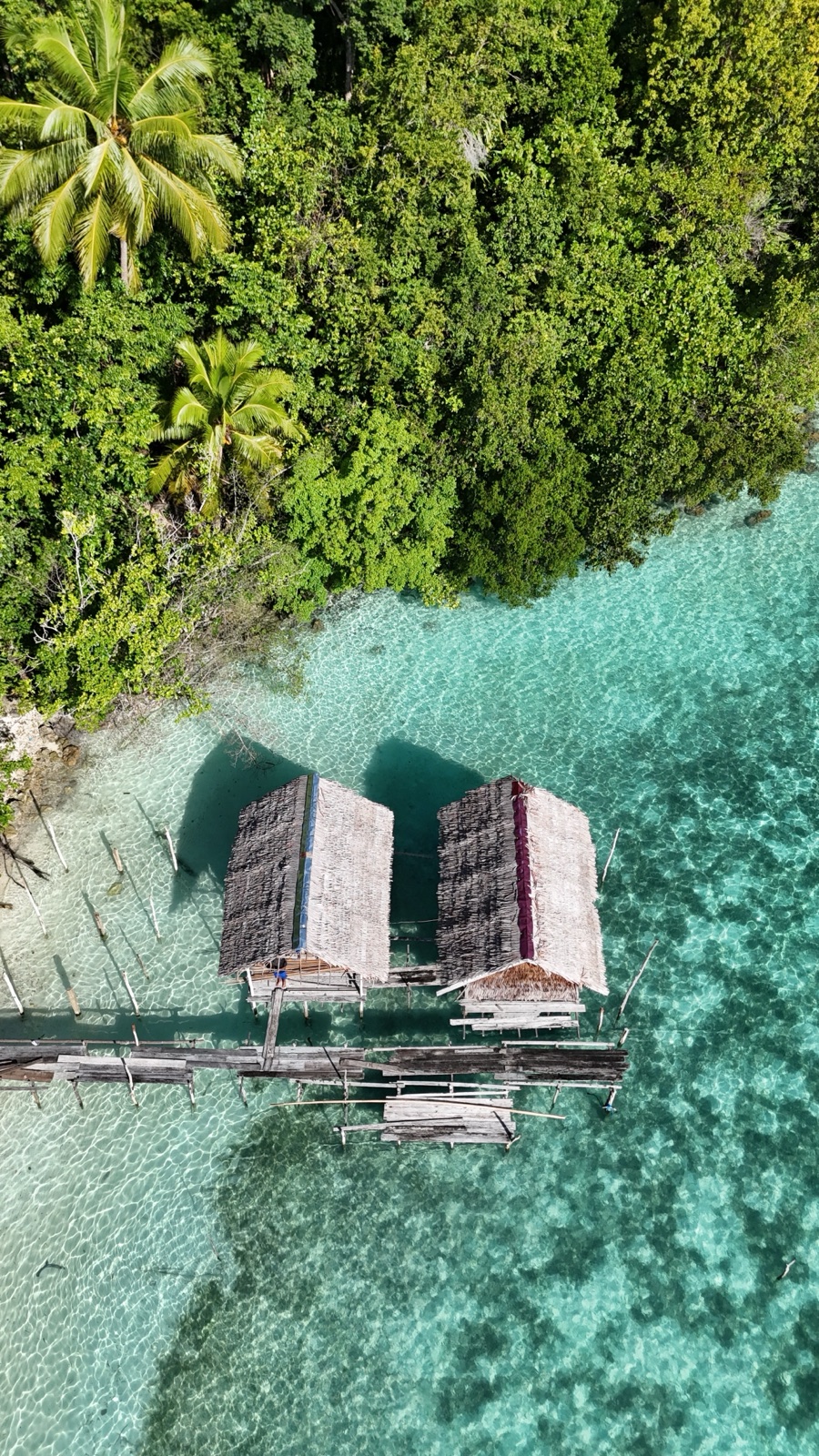
A homestay here is a handful of wooden bungalows on the beach or on stilts over the reef, built and run by a local family. Three meals a day are included, eaten together. You book the bed and the family organises the rest: the boat from Waisai, the trips out, the tide you go snorkelling on. Expect roughly 500,000 to 850,000 IDR per person per night with full board, about €30 to €50. I slept in homestays on Kri, Gam, Mansuar and Arborek, and I would book the same way again.
There are a few full-service eco-resorts in the archipelago: private bungalows, a restaurant, a dive centre, transfers and excursions all handled for you. Most ask for three nights minimum, and three nights for two can reach around €2,000. I visited one. Everything worked, the place was lovely, and standing there I had the feeling that we were starting to drift away from the reason people come to Raja Ampat at all.
It is the right choice for one profile: a high budget, little time, and no wish to organise anything. If that is you, it delivers exactly what it promises.
A liveaboard is a sailing boat you live on for several days, moving from dive site to dive site. I did not do one, but I spent evenings with people who had, and their verdict was always the same: it is mostly a diving trip. Most dive twice a day, most of them already have real experience, and they loved it. Count around €300 to €600 per person per day.
For a diver, it is a dream. For a traveller who mainly wants to snorkel, meet people and slow down, it is rarely the best fit, and it is an expensive one.
| Homestay | Eco-lodge | Liveaboard | |
|---|---|---|---|
| Price | ~€30 to €50 per person per night, meals included | ~€2,000 for 3 nights for two | ~€300 to €600 per person per day |
| Comfort | Simple: wooden bungalow, rainwater, no hot shower | Full service | Cabin on a boat |
| Diving | Possible: dive centres pick you up | Dive centre on site | At the heart of the trip |
| Local life | You live with the family | Little | Almost none |
| Organisation | The family arranges boats and trips | Everything handled | Everything handled |
| It is for you if | You want the real place on a sensible budget | Budget is high and time is short | You are mostly coming to dive |
Prices are orders of magnitude from my stays and from people who chose the other two. Check the current rate before you book.
------------------------------------------------------------------------------------------------------------------------
In the guide I recommend my best homestays directly, island by island: the ones I slept in, what I paid, and how to reach the family.
See the homestays in the guide →Readers of this article get 10% off with the code BLOG10
------------------------------------------------------------------------------------------------------------------------
Not for the price, even if the price helps. For what happens around the bed.
On my first night I counted five geckos on the walls of my room. By the third night I looked for them before switching off the light. On another island a boy walked up to me and offered to show me where he goes to class. I followed him, and the whole afternoon went to him and his friends, the village, and the drone they took turns flying. None of that is in a brochure, and none of it happens behind a resort gate.
by day four the family stopped asking what i wanted for dinner. they just set my place.
The money matters too. A homestay night pays a Papuan family directly, on the island the reef belongs to. And the honest cost of all this is comfort: no restaurant, instant coffee, a bucket shower, and a signal that comes and goes. If you know that before you land, it stops being a problem and starts being the trip.
A wooden bungalow with a mattress, a mosquito net and a small veranda, sometimes over the water.
Washing water is usually rainwater, poured with a scoop from a tank. Electricity comes from a generator or solar panels, often only in the evening and at night. Bring a power bank and charge everything at dinner.
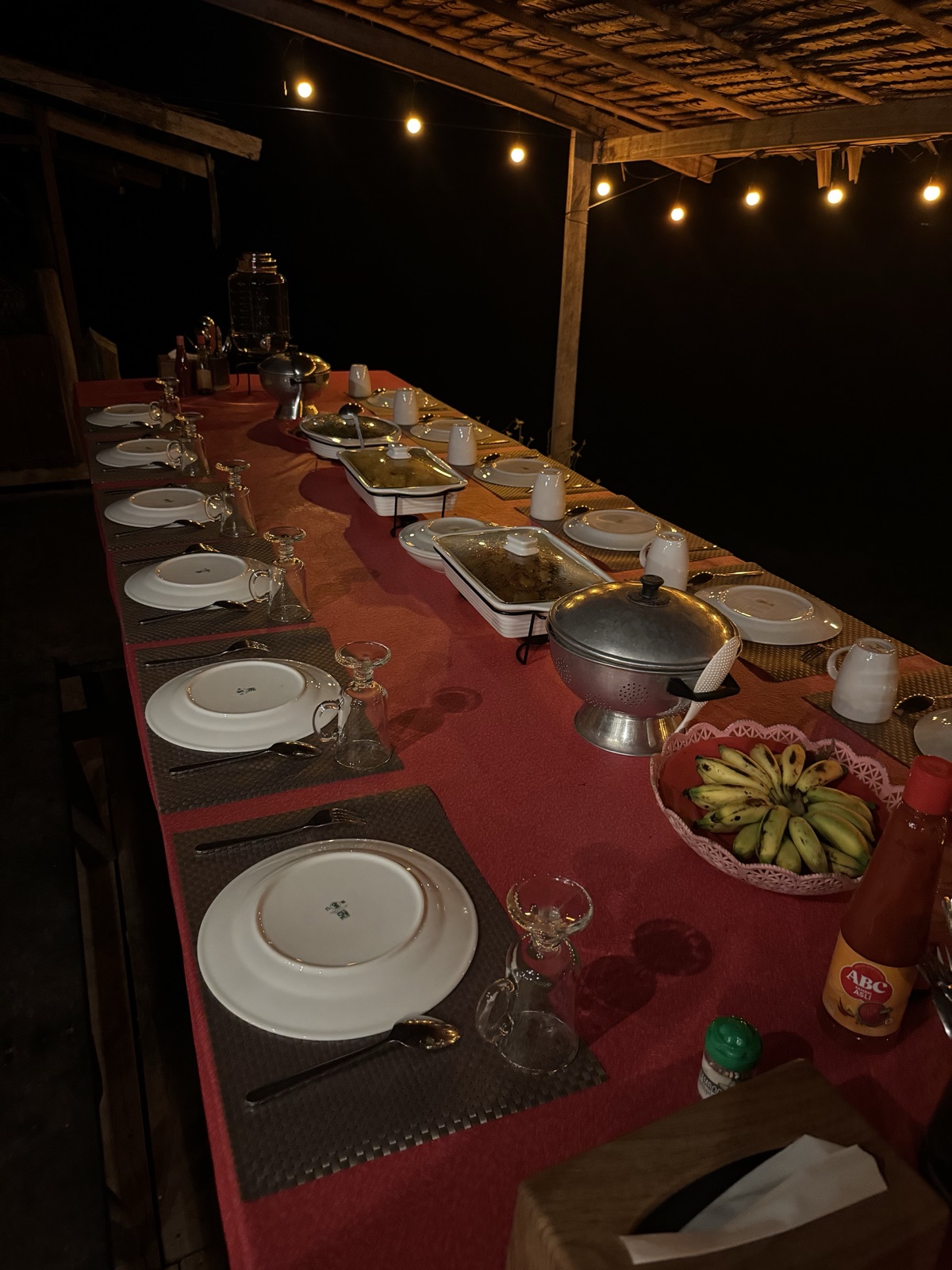
Full board, cooked by the family: rice, fish of the day, eggs, vegetables, fruit. Breakfast leans heavily on carbs, which is the most common complaint, so pack a few snacks from Sorong. The coffee is instant.
Mobile data works in some places and not in others, even on the same island. A few homestays now have satellite wifi. Plan to be offline more than you think, and tell people at home before you leave.
a plain room on the right reef beats a beautiful one two hours away.
Once you know you want a homestay, one question is left, and it matters more than the house: the island. It decides how long your boat rides are, what a day of trips costs, and whether your evenings are busy or silent. Choosing it well, and choosing the house on it, is the part I spent months on, and it is what the guide does.
Yes. Dive centres come and pick you up at your homestay, and some homestays have their own dive centre. You do not need a resort or a liveaboard to dive Raja Ampat. And if you do not dive at all, I wrote about Raja Ampat without diving.
Usually not. The days are mostly built around diving, many guests are experienced divers, and you pay for a diving programme you will not use. A homestay gives a non-diver far more for far less.
Roughly 500,000 to 850,000 IDR per person per night with meals included, about €30 to €50. The boat transfer from Waisai is extra and often costs more than a night.
For the busy months (see when to go to Raja Ampat), yes, a few weeks ahead: the best houses only have a handful of bungalows. Outside those weeks you can often confirm a few days before, by WhatsApp.
The full guide
This article tells you what kind of place to sleep in. The guide tells you which island and which house: the homestays I actually stayed in, what I paid per night, the transfer costs, and the WhatsApp numbers that replied. 17 chapters, 85 pages, English or French.
See the guide →Readers of this article get 10% off with the code BLOG10
Iddar
WildRoute · Field Edition