Raja Ampat · If you don't dive
It is the second most common message I get, right behind the one about where to sleep: I don't dive. Is Raja Ampat still worth it?
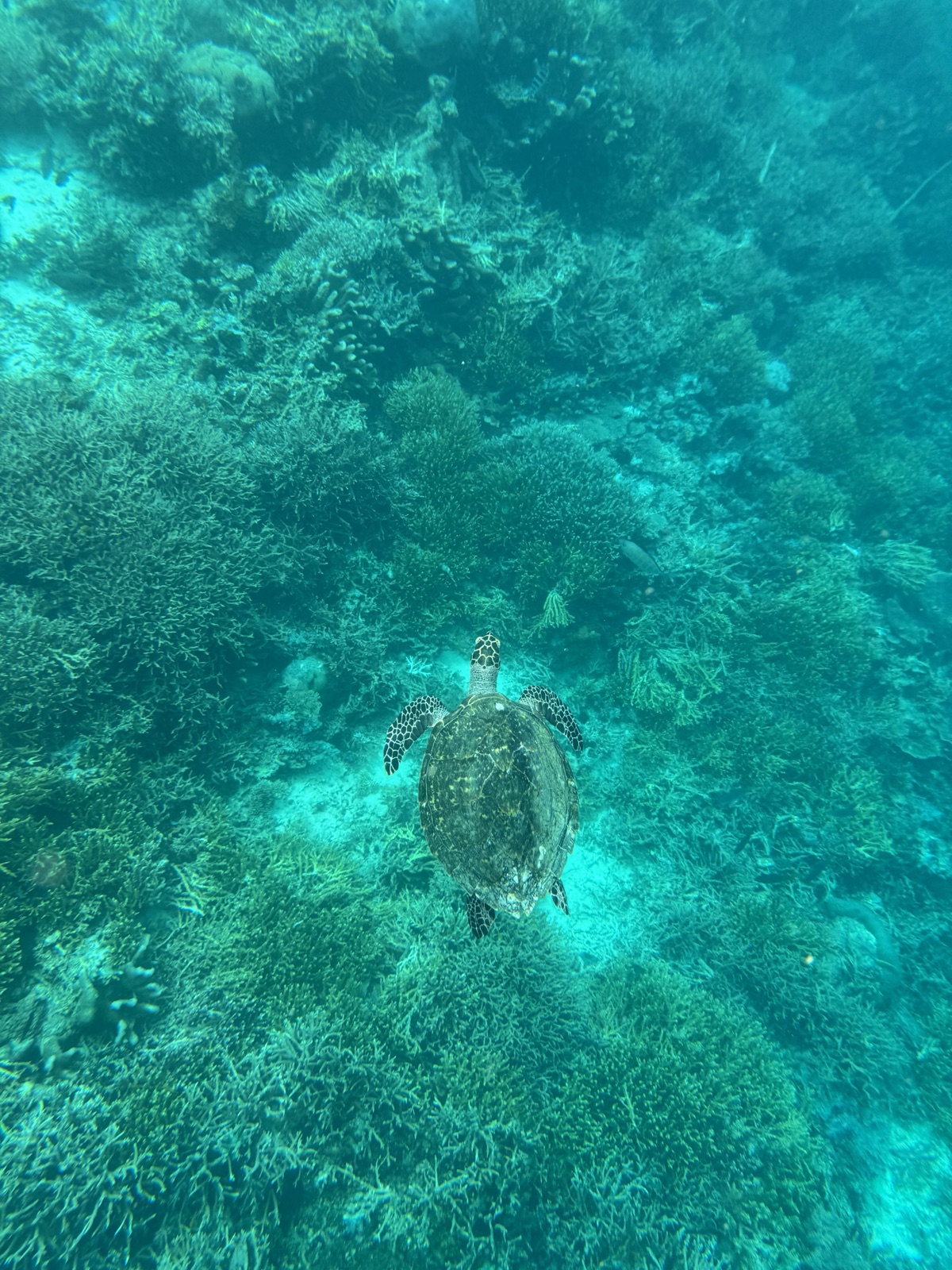
Yes. And not as a consolation prize. The thing almost nobody says out loud is that most of what makes this place extraordinary happens in the first five metres of water, which is exactly where a snorkeller lives.
In most of the world you snorkel over a reef that is dying, distant, or both. You float above something happening ten metres below you and you squint.
Here the reef starts at the steps. Almost every homestay is built over or beside coral, and the drop-off is often close enough that you swim out, put your face in the water, and the wall is simply there. No boat, no schedule, no guide, no waiting for anyone. That is the part I underestimated before going, and the part I ended up doing most days.
the best hour of most days cost me nothing. i walked down the steps.
------------------------------------------------------------------------------------------------------------------------
Raja Ampat is not a place you improvise. There are no roads between the islands, almost nothing to arrange once you land, and if you are not diving, the house reef in front of your homestay matters more than anything else you book. Choosing that badly is the difference between a great trip and an expensive one. The guide is where I put all of it: the homestays I actually slept in, what each one costs, four complete routes, the boat prices, and the map of the spots.
Explore the Raja Ampat field guide →------------------------------------------------------------------------------------------------------------------------
I would rather be straight with you than sell you a fantasy. Some things belong to divers: the deep walls, the sites that only make sense on a strong current, the big schooling fish that hold at twenty metres, and a handful of famous spots that are simply too deep to read from the surface.
There is also a rhythm difference. Dive boats leave early and go far. If you are snorkelling you will sometimes be the person waiting on a jetty while others come back talking about something you did not see. That is worth knowing before you build a trip around it.
But the trade is smaller than divers imply, and it comes with a compensation nobody mentions: your day is yours. You are not tied to a boat schedule, a group, or a surface interval.
Diving is the single biggest line in most Raja Ampat budgets, and it compounds: gear, guides, multiple tanks a day, sometimes a package you commit to before arriving. Take that out and the trip changes shape entirely.
What still costs money is boats. Reaching the well-known spots means hiring one, and that price is per boat rather than per person, so it barely moves whether you dive or not. Which leads to the one piece of advice that matters most if you are not diving.
the house reef is free. the boat never is.
If you dive, the house reef is a bonus. If you snorkel, it is the trip. It decides what you do on the mornings you don't take a boat, which will be most mornings, and it is the difference between a place you swim from constantly and a place where you wait around for something to happen.
So flip the usual order. Look at the water first and the bungalow second, and ask the owner directly what the reef is like off the jetty and where the drop-off is. They know, and they will tell you honestly, because a disappointed guest is worse for them than an empty room.
Stay in the central cluster of islands for your first trip. Almost everything a snorkeller wants sits in one small stretch of water there, and the further out you go the more you are paying for boats to bring you back to it.
Bring your own mask and fins. Rental gear exists but the quality is a lottery, and a leaking mask ruins a week of the thing you came for. It is the one piece of kit worth the luggage space.
Take the currents seriously. This is the part that actually matters for your safety. The water between islands moves hard and it moves fast, and it does not care that the distance looks short from the beach. Never swim a channel, ask the family you are staying with before you get in anywhere new, and go with what they say. They read this water every day of their lives.
If you can swim comfortably and you are happy in open water: yes, without hesitation. You will see more from the surface here than you will see diving in most other places, and you will spend a fraction of what the divers next to you are spending.
If you were only coming for the deep sites, or you are not confident swimming: think again, or plan to learn to dive when you arrive. Half the people I met had done exactly that.
The full guide
This article tells you it works. The guide tells you where: the homestays I slept in and what I paid, four routes from 7 to 21 days planned day by day, the boat prices leg by leg, and my Google Maps collection with the spots. 17 chapters, 85 pages, English or French.
See the guide →Iddar
WildRoute · Field Edition